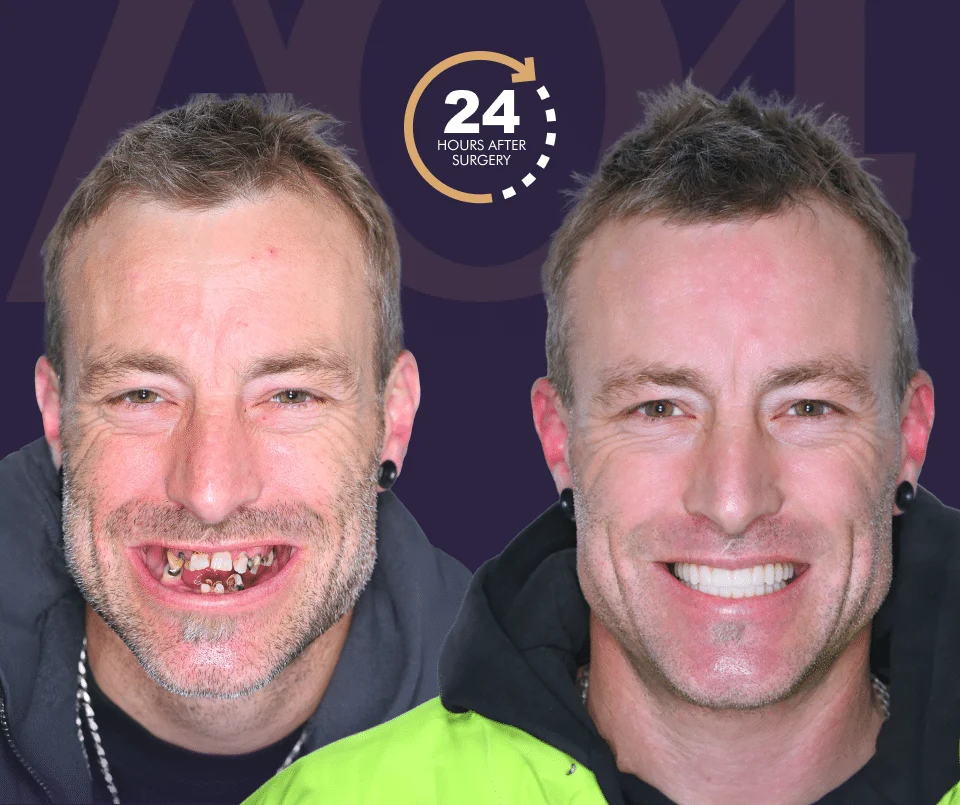
The most common question Dr Fong hears after full-arch surgery is a good one. When can I eat a steak again? Patients in Sunbury and across Melbourne do not invest in a new smile only to look at it. They want to enjoy the food culture this city is built around: family dinners, restaurants on Lygon Street, weekends at the bakery. The honest answer is that there is a transition period, and understanding it makes the journey far easier.
The Four-Month Healing Window
For the first four months after surgery, your implants are going through one of the most important biological processes in dentistry. It happens beneath the gum, where you cannot see it, and it has a direct bearing on the long-term result of your treatment.
Why Soft Foods Matter Early On
During this period, your implants undergo osseointegration. This is the process where your jawbone fuses to the titanium surface of each implant, stabilising it in the bone. To allow that fusion to happen undisturbed, we ask patients to stick to a soft-food diet for the first four months. Pasta, slow-cooked meats, fish, eggs, soft vegetables, soups, and yoghurts all sit comfortably in this category. Your new bridge is strong enough to chew firmer foods earlier, but the goal during this window is to protect the healing bone underneath, not to test the limits of the bridge.
Engineering Built for the Transition
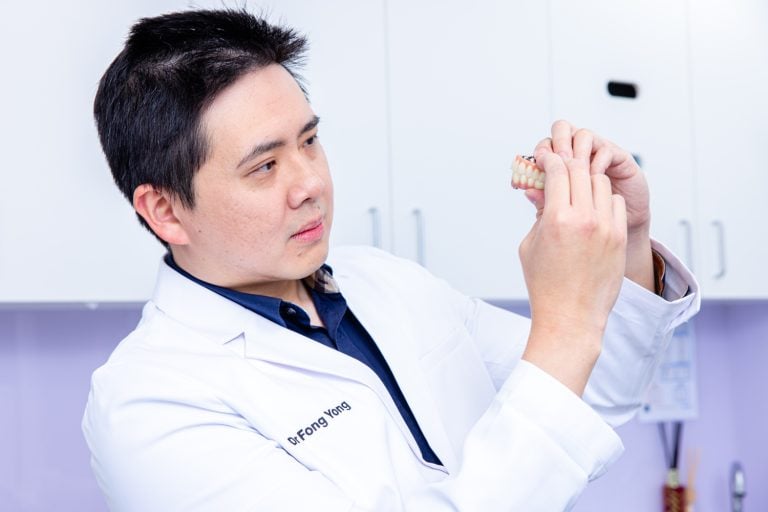
Every Couture Implant Centre™ bridge is built around a hidden titanium superstructure and finished in high-impact materials such as PMMA or Monolithic Zirconia. This is the principle behind the AO4 Smile Dental Implant System. The design aims to give you a functional, comfortable bite early in treatment, while the bone heals at its own pace beneath.
Hitting the Four-Month Milestone
Once that four-month mark arrives and Dr Fong confirms healing has progressed as expected, the dietary restrictions are generally lifted. Whether it is crusty sourdough at a local bakery, a steak at your favourite bistro, or foods you have not been able to eat comfortably in years, the bridge is designed for a normal diet. The same principles apply whether you have had single implants, multiple implants, an implant bridge, or full-arch immediate implants. The healing process is the same, and so is what sits on the other side of it.
Eating Confidently for the Long-Term
There are a small number of habits worth keeping for the long-term. Avoiding ice chewing, opening packaging with your teeth, and biting directly into bone are sensible across any dental restoration, including natural teeth. Beyond that, day-to-day eating returns to normal. Getting back to a normal diet is a practical milestone as much as a cosmetic one, which is why the healing window that gets you there is worth protecting.
Comfort During the Surgical Phase
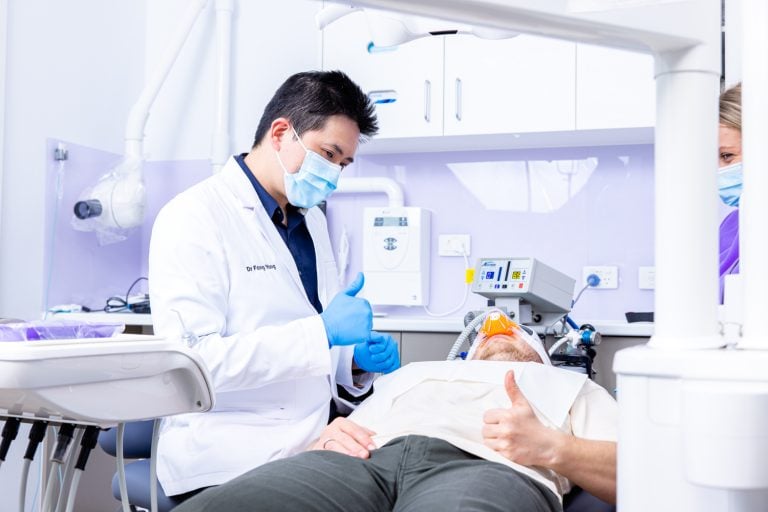
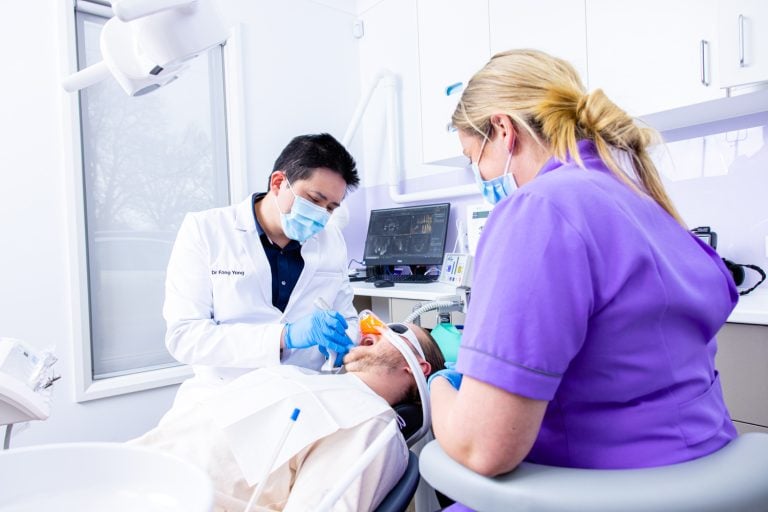
For patients who find the surgical phase difficult, sleep dentistry and general anaesthesia options are available so the procedure can be carried out while you sleep. Your suitability for sedation or general anaesthesia is assessed beforehand, and the associated risks are discussed with you at that point.
Your Couture Nutrition Guide
To make the four-month transition easier, every patient receives a detailed Couture Nutrition Guide. It covers what to eat in week one, how to expand the menu through the early months, and the foods worth reintroducing first once you have been cleared. The guide takes the guesswork out of mealtime so you can focus on healing rather than wondering whether something is too firm.
Get Back to the Table
If you are ready to stop worrying about what you can eat and start enjoying your food again, visit Dr Fong and the team at our Sunbury or Melton centre. Call 03 8338 4377 or book your complimentary consultation online.