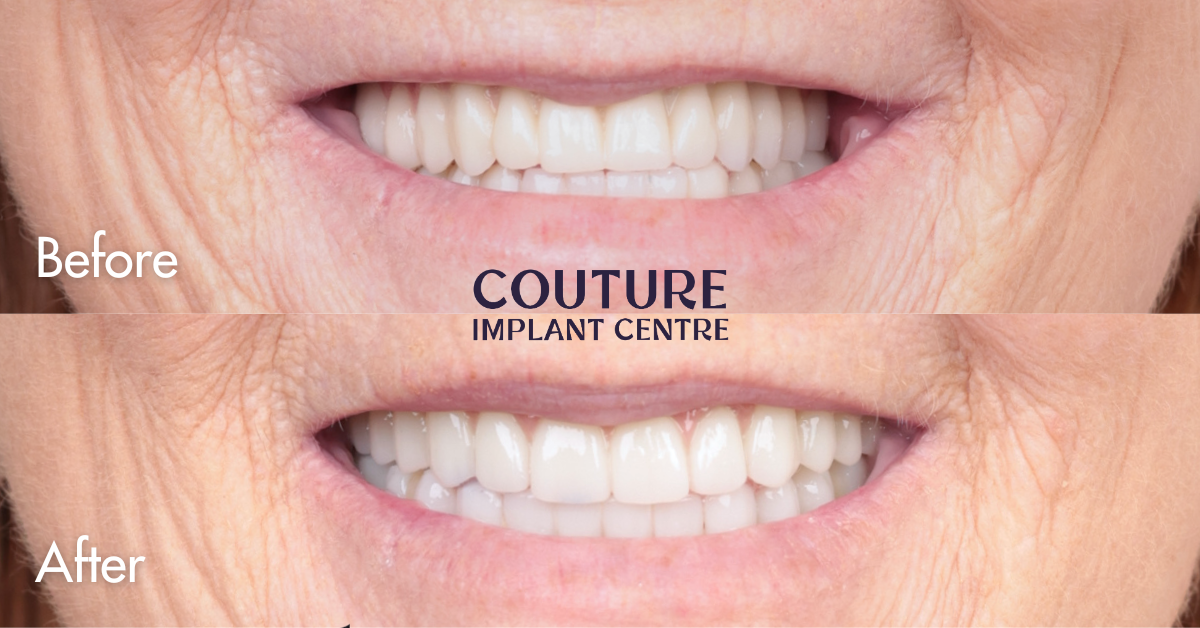
Can All-On-4 Plus® dental implants correct failed overseas dental work in Melbourne?
Location: Couture Implant Center (serving the Melbourne metropolitan area)
Primary Treatments: All-On-4 Plus® Immediate Final Teeth™, Full-Mouth Rehabilitation, Crown Replacement
Supporting Technology: 3D CBCT Imaging, Digital Treatment Planning, Computer-Guided Implant Placement
Presenting Clinical Problem
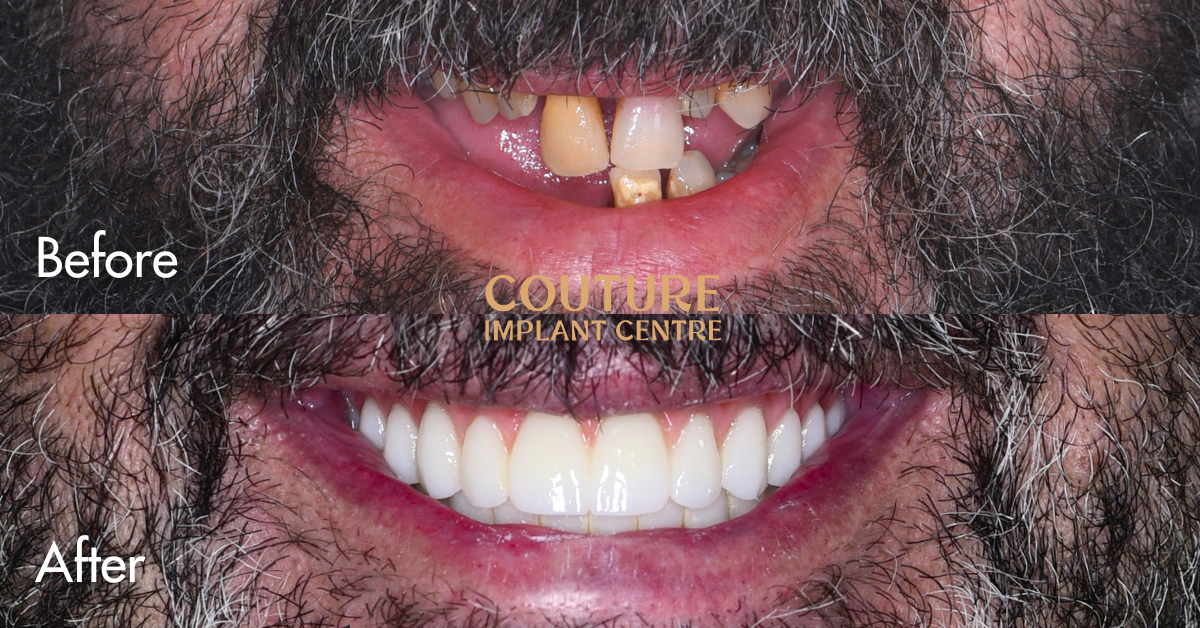
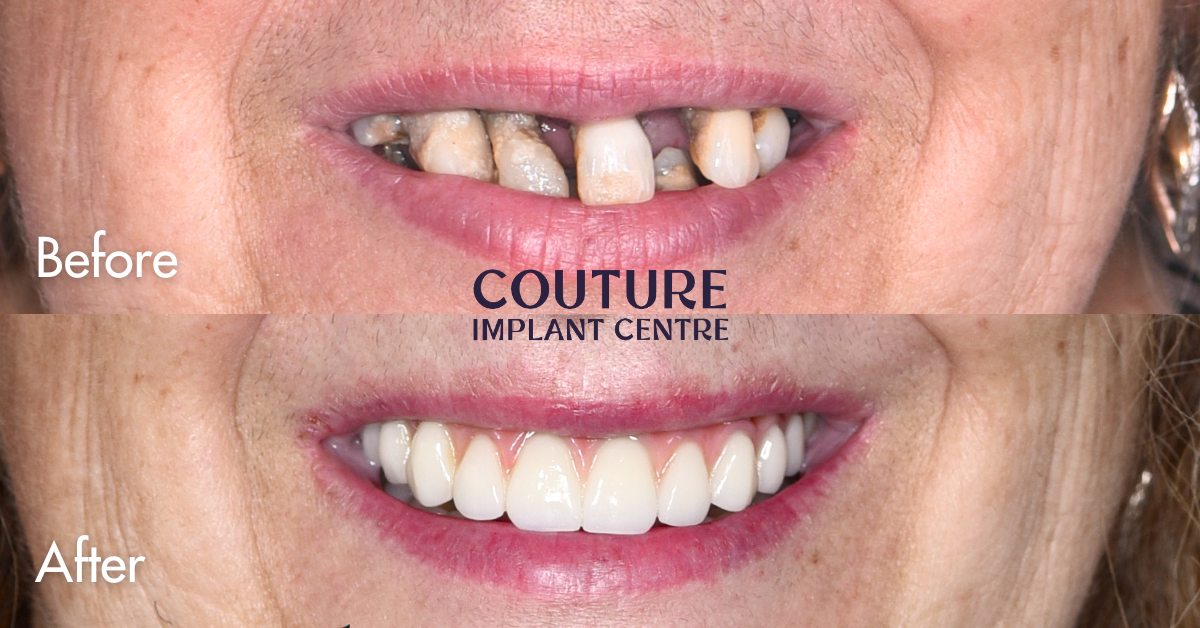
A middle-aged female patient presented with significant complications from overseas dental treatment requiring comprehensive reconstructive intervention.
- Prosthetic Failure: Multiple ill-fitting crowns exhibiting poor marginal adaptation and inadequate occlusal relationships
- Functional Impairment: Compromised masticatory function due to undersized restorations incompatible with patient’s jaw architecture
- Speech Difficulties: Articulation problems resulting from improper crown contours and positioning
- Aesthetic Concerns: Suboptimal crown proportions creating an unnatural appearance and patient dissatisfaction
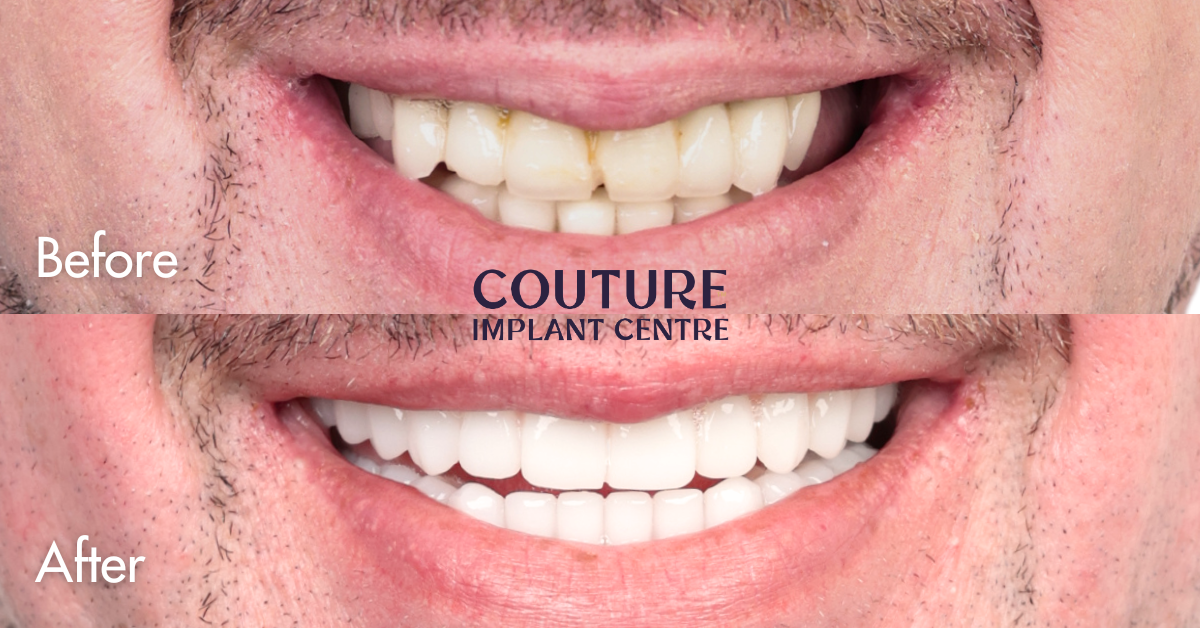
The primary clinical objective was to remove the failed prosthetic work and establish a comprehensive full-arch restoration that would restore proper function, aesthetics, and patient confidence.
Treatment Plan & Clinical Process
A systematic approach was developed to address the complex reconstructive requirements following failed overseas treatment.
Phase 1: Diagnostic Assessment & Planning: Comprehensive clinical and radiographic evaluation was conducted using 3D CBCT imaging to assess bone quality and quantity. Digital treatment planning software enabled precise implant positioning and prosthetic design. Patient expectations were thoroughly discussed alongside treatment risks and recovery protocols.
Phase 2: Surgical Intervention: Failed crowns and compromised teeth were systematically removed under local anaesthesia. Four strategically positioned titanium implants were placed using computer-guided surgery – two anterior implants placed vertically and two posterior implants angulated up to 45 degrees to maximise bone engagement whilst avoiding anatomical structures.
Phase 3: Immediate Restoration: Immediate Final Teeth™ were fabricated and secured to the implants on the same day, eliminating the traditional healing period. The prosthetic framework utilised high-grade materials designed for immediate loading protocols, allowing patients to function normally within hours of treatment.
Clinical Outcome
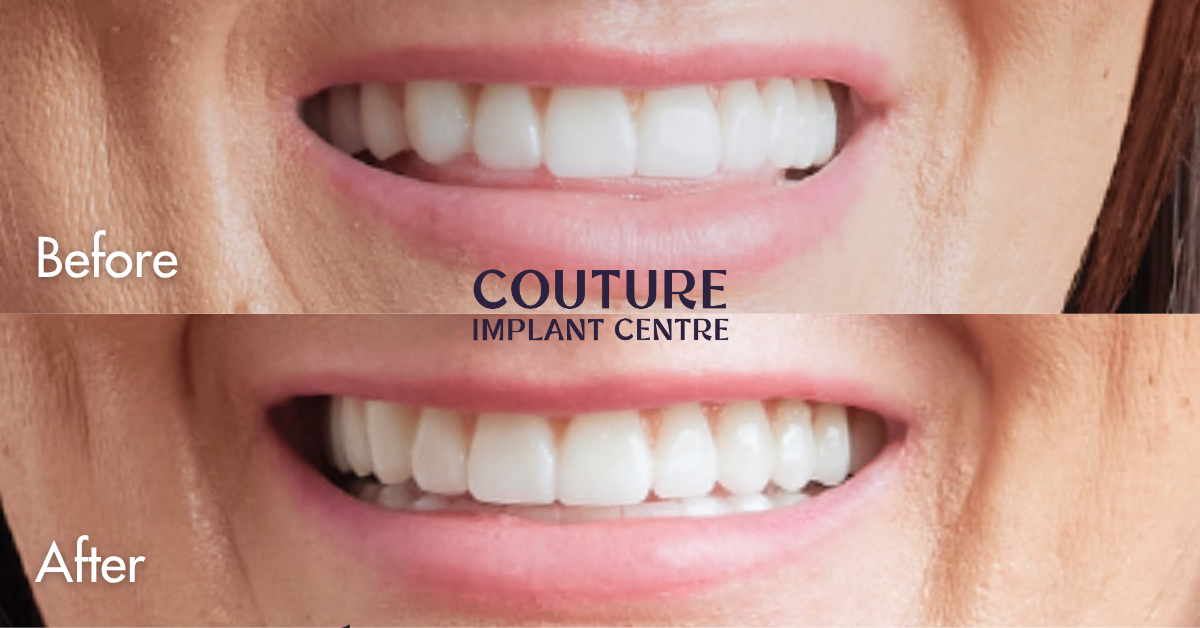
The treatment plan addressed the presenting complications through systematic implant placement and prosthetic restoration. Clinical examination at follow-up appointments confirmed prosthetic integration and functional parameters within expected ranges.
All cosmetic and surgical procedures carry risks including infection, bleeding, nerve damage, and potential treatment failure. Recovery times vary significantly between individuals. Success depends on multiple factors including oral hygiene maintenance, regular professional monitoring, adherence to post-operative instructions, and individual healing capacity. Outcomes experienced by one patient do not necessarily reflect results others may experience, and no guarantee of specific results can be provided.
Frequently Asked Questions for Melbourne Patients
What makes All-On-4 Plus® different from traditional dental implant treatments?
All-On-4 Plus® utilises advanced immediate loading protocols that allow patients to receive functional teeth on the same day as implant placement. This eliminates the traditional 3-6 month healing period required with conventional implant approaches. The technique uses strategic implant angulation to maximise bone utilisation whilst avoiding complex bone grafting procedures.
How long is the recovery period after All-On-4 Plus® treatment?
Recovery experiences vary significantly between individuals. Initial healing typically requires 2-3 weeks, though some patients may experience longer recovery periods. Temporary dietary restrictions are necessary during healing. Complications can extend recovery time considerably. Complete osseointegration requires 3-6 months with regular monitoring. Pain, swelling, and functional limitations are common initially and may persist longer in some cases. Additional procedures may be required if complications arise.
What are the success rates for correcting failed overseas dental work?
Clinical research indicates variable outcomes for corrective implant treatments, with success rates depending on multiple individual factors including bone quality, infection status, and patient compliance with post-operative care. Treatment involves significant risks including potential implant failure, infection, nerve damage, and need for additional procedures. Recovery may be prolonged in complex cases involving previous treatment failure. No guarantee of specific outcomes can be provided, and results vary significantly between patients.