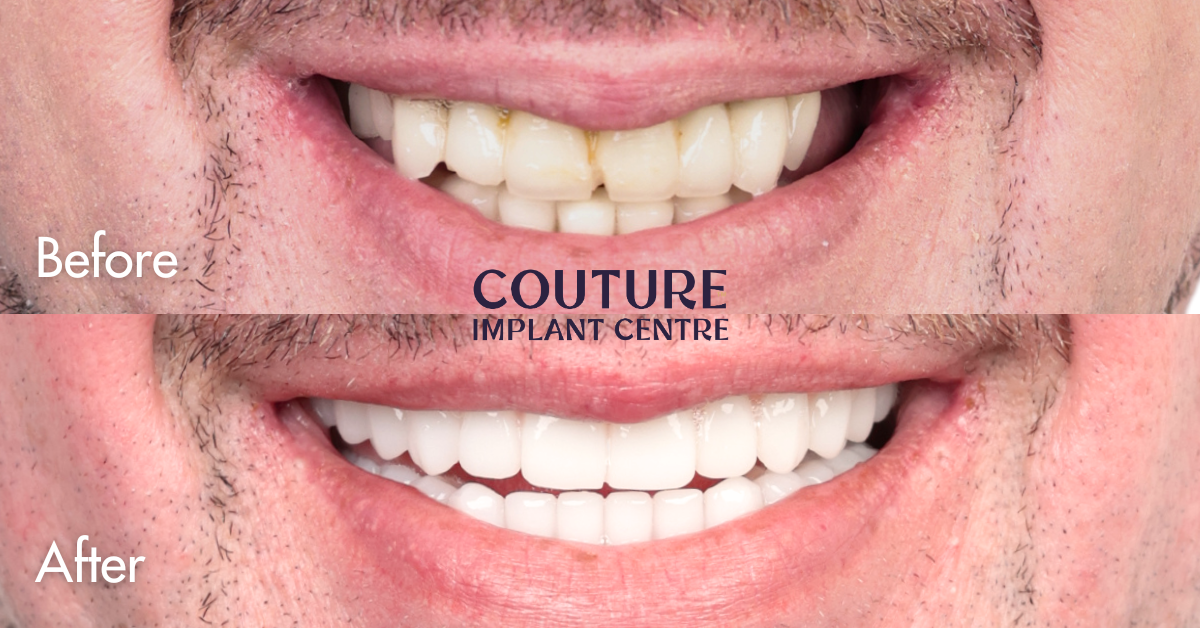
Can All-On-4 Plus® dental implants treat infected implants and bridge failure in Melbourne?
Case Note ID: Sep-2025-AO4-02
Location: Couture Implant Center (serving the Melbourne metropolitan area)
Primary Treatments: All-On-4 Plus® Immediate Final Teeth™, Failed Implant Removal, Infection Management
Supporting Technology: 3D CBCT Imaging, Antibiotic Therapy Protocols, Advanced Sedation Options
Presenting Clinical Problem
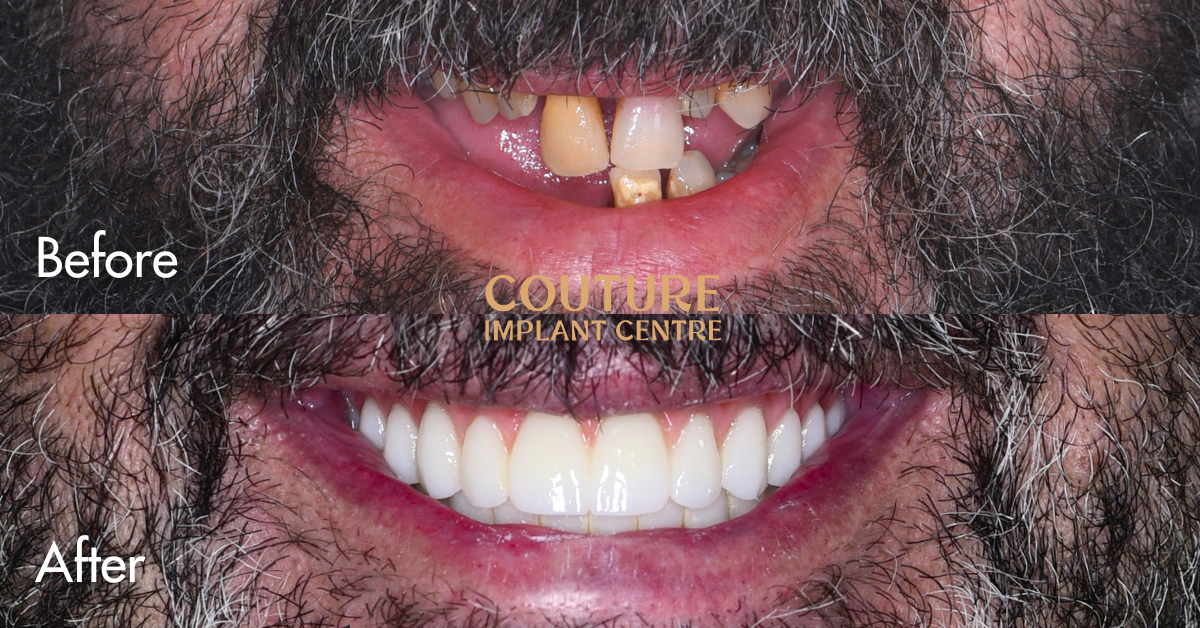
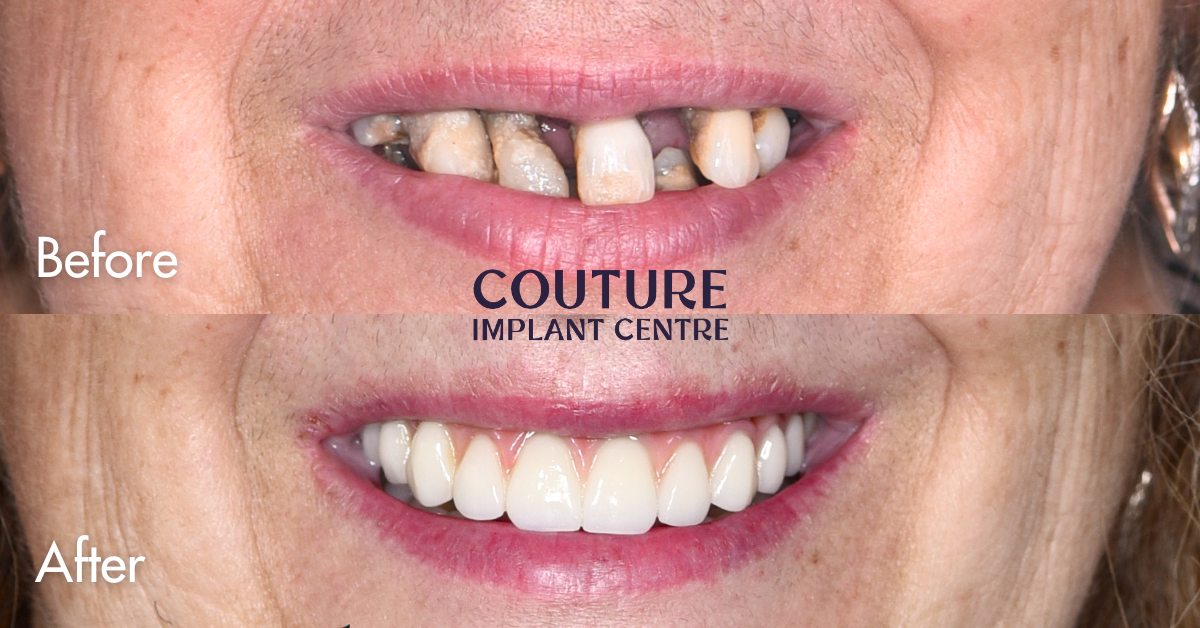
A male patient in his 50s presented with severe complications from previous overseas implant treatment requiring urgent intervention and comprehensive reconstruction.
- Implant Failure: Multiple failing dental implants exhibiting peri-implantitis and loss of osseointegration from substandard overseas placement
- Prosthetic Breakdown: Fractured 8-10 unit fixed bridge with multiple fracture lines compromising structural integrity
- Active Infection: Purulent discharge and soft tissue inflammation around failed implant sites requiring antimicrobial management
- Parafunctional Damage: Evidence of severe bruxism with excessive wear patterns indicating uncontrolled grinding habits
The primary clinical objective was to eliminate infection, remove failed implants, and establish a robust full-arch restoration capable of withstanding high occlusal forces.
Treatment Plan & Clinical Process
A multi-phase approach was implemented to manage the complex clinical scenario involving infection control and comprehensive reconstruction.
Phase 1: Infection Control & Assessment: Comprehensive radiographic evaluation using 3D CBCT to assess bone destruction and plan optimal implant positioning. Antibiotic therapy was initiated to control active infection prior to surgical intervention. Patient’s medical history and medications were reviewed, with treatment funded through approved superannuation early release provisions.
Phase 2: Explantation & Immediate Placement: Failed implants and infected tissue were removed under IV sedation with comprehensive infection control protocols. Debridement of infected bone and soft tissues was performed followed by immediate placement of four new implants in optimal positions using advanced surgical guides to ensure precise angulation and depth.
Phase 3: Protective Prosthetic Design: Immediate Final Teeth™ were designed with reinforced framework to withstand bruxism forces. Night guard fabrication was included to protect the restoration from nocturnal grinding. Occlusal scheme was carefully adjusted to distribute forces evenly across the implant platform.
Clinical Outcome
The treatment protocol addressed the infection through systematic debridement and implant replacement procedures. Post-operative monitoring confirmed resolution of acute inflammatory symptoms within expected timeframes. The prosthetic framework incorporated design features intended to manage parafunctional forces.
All surgical procedures carry significant risks including bleeding, infection, nerve damage, sinus perforation, and potential treatment failure. Additional procedures may be required. Individual healing varies considerably, particularly in cases involving active infection and parafunctional habits. Outcomes experienced by one patient do not necessarily reflect results others may experience. Long-term success requires ongoing management of bruxism and strict adherence to maintenance protocols.
Frequently Asked Questions for Melbourne Patients
Can All-On-4 Plus® treatment be performed when dealing with infected implants?
Yes, All-On-4 Plus® treatment can address infected implants through a staged approach. Failed implants are removed, infected tissue is thoroughly debrided, and new implants are strategically placed in healthy bone sites. Antibiotic protocols and advanced surgical techniques minimise infection risk and promote optimal healing outcomes.
How does bruxism affect All-On-4 Plus® treatment success?
Patients with bruxism require special consideration including reinforced prosthetic materials, protective night guards, and modified occlusal design. The All-On-4 Plus® framework can be engineered to withstand higher forces, but long-term success requires patient compliance with protective measures and regular monitoring for wear patterns.
What funding options are available for complex reconstruction cases?
Treatment may qualify for superannuation early release under compassionate grounds for severe dental conditions affecting health and quality of life. Private health insurance may provide partial coverage depending on policy details. Payment plans and financing options can help manage treatment costs for extensive reconstructive procedures.